

Skin School · 7 min read
Scalp microneedling for hair growth: what it actually does
August 12, 2026
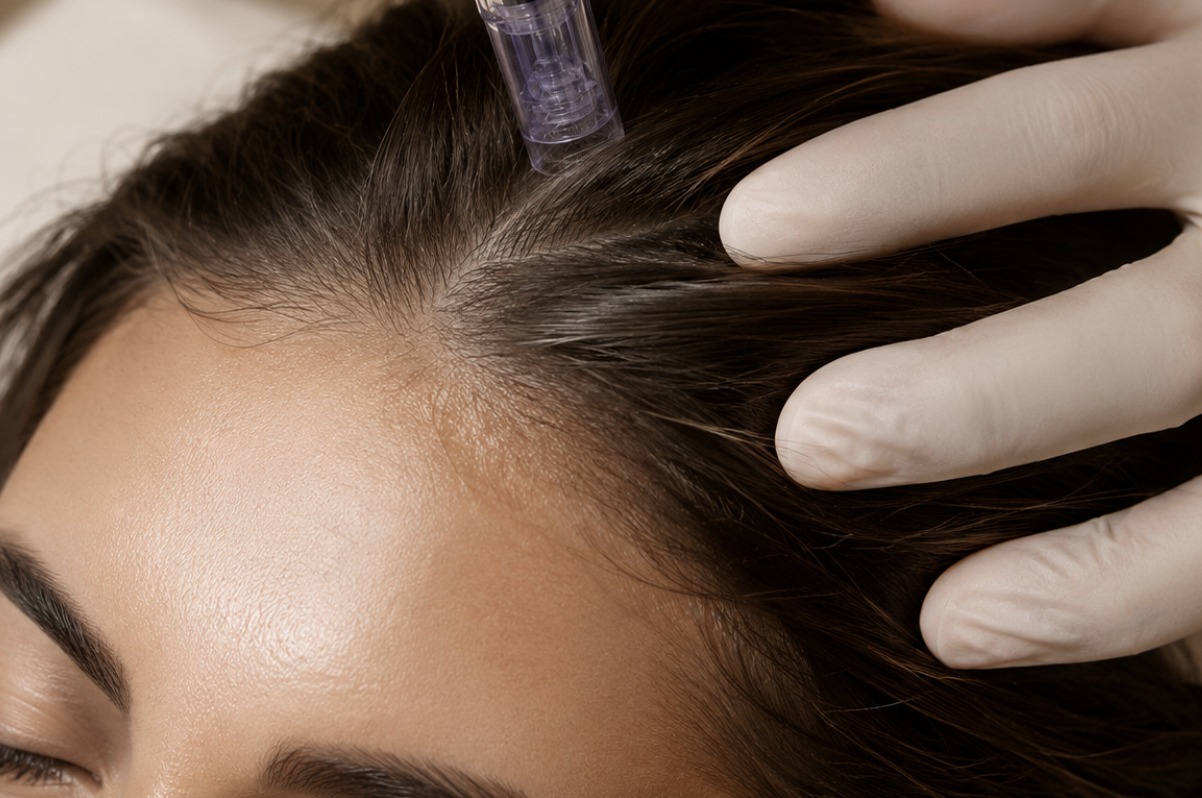
Microneedling the scalp doesn't grow hair on its own. It changes the environment the follicle lives in, and it makes what you put on your scalp work harder.
If you are here, something has probably already changed. A part that reads wider in photographs. A ponytail that wraps one extra time. A shower drain you've started noticing.
And the internet's answer to that is a $30 roller and a lot of confidence.
So here is the version without the confidence: microneedling does not grow hair. It changes the conditions around the follicle, and it makes what you put on your scalp work harder. That's a smaller claim than the ads make, and it's the one the research actually supports.
The mechanism is the same one your face uses
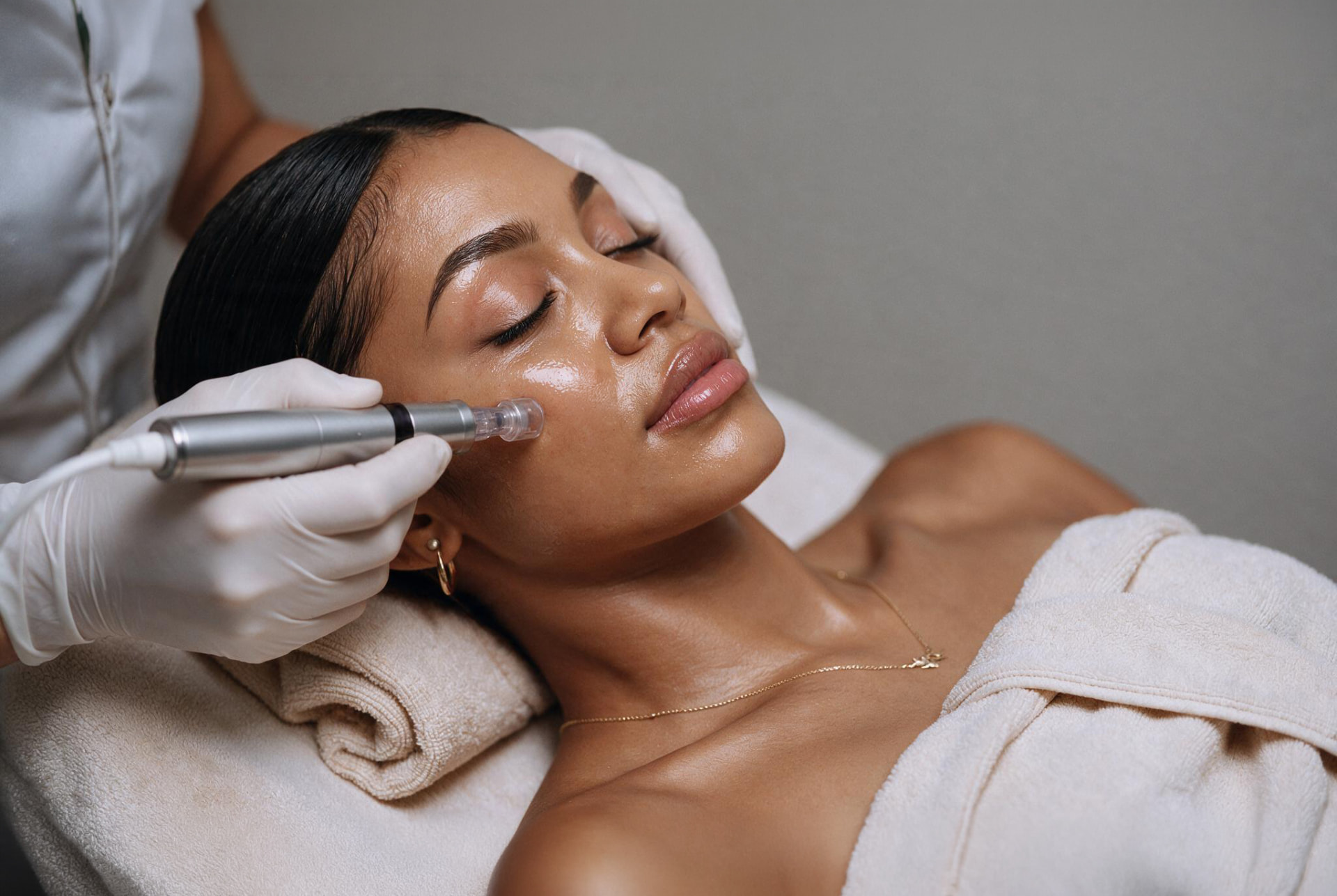
Nothing about the scalp changes the underlying idea. A medical device creates a dense field of tiny channels. Your body reads that as an injury and starts the repair sequence: inflammation, then proliferation, then remodelling.
The part that matters for hair is the middle stage. That repair releases growth factors and pulls blood supply into the area, and hair follicles are extremely responsive to that environment. They sit in the dermis, surrounded by the exact tissue you just asked to rebuild itself.
If you want the long version of the cascade, it's the same biology we walk through in microneedling 101.
The evidence worth quoting
The most cited study here is a randomised trial comparing minoxidil alone against minoxidil plus weekly microneedling in men with androgenetic alopecia. The combination group did substantially better on hair count and on patient-rated improvement, and the difference was not subtle.
That framing matters. The finding isn't "needles grow hair." The finding is "needles plus a proven topical beats the topical alone."
Later reviews of microneedling in hair loss have landed in the same place: promising as an adjunct, still limited by small study sizes and inconsistent protocols. Anyone quoting you a precise percentage from a single small trial is over-reading the data.
The unglamorous second benefit: delivery
There's a reason your scalp serum feels like it mostly disappears.
The outermost layer of skin is a barrier by design, and it is very good at its job. Most topicals lose the majority of their dose to it. Microneedling temporarily bypasses that barrier, and micropore studies show those channels stay measurably open for somewhere in the range of two days, varying by skin type.
So the same product, applied into a scalp that was treated properly, is simply more available to the tissue you were aiming at. That is a real, mechanical advantage and it costs nothing extra.
One caveat that gets skipped constantly: better absorption also means better absorption of things you didn't intend. Fragranced products, actives, anything harsh. The day of a treatment is the day to be boring.
Timelines, honestly
Hair does not respond on a skincare timeline. It responds on a hair cycle.
Every follicle moves through a growing phase that runs for years, a brief transition, and a resting phase before the strand releases. Any intervention has to wait for follicles to re-enter growth, which is why nothing visible happens quickly.
Twelve weeks is an early read. Six months is a fair one. And the honest first sign of progress is usually not new length, it's less shedding and more short regrowth along the part.
There's also a detail nobody warns people about: shedding in the first weeks is common. Follicles pushed out of a resting phase drop the old strand before the new one comes through. It looks like failure and is frequently the opposite.
Frequency, and why more is not better
The trial that people quote used a weekly cadence with a specific device and depth. Most clinical protocols since have run somewhere between weekly and monthly depending on depth.
The principle is the same one we've written about at length in why frequency matters: the reps are the treatment. But there is a ceiling. Treating again before the last round has finished healing swaps productive repair for chronic irritation, and irritated scalp is not a growth environment.
Where at-home rollers fall down
This isn't gatekeeping, it's three specific problems.
Depth. Rollers apply pressure unevenly across a curved skull, so the depth you get is whatever your hand did that day. Too shallow does nothing. Too deep on a scalp is a scarring risk, and scarred follicles don't come back.
Sterility. A device that lives in a bathroom and is used on broken skin is a genuine infection route, and folliculitis is a common outcome.
Density and quality. Needle count, sharpness and consistency vary enormously in consumer devices, and blunt needles tear rather than puncture.
Get the cause named first
This is the part we'd want a friend to hear.
Hair thinning is a symptom, not a diagnosis. Androgenetic pattern loss, postpartum shedding, thyroid disease, iron deficiency, stress-driven shedding after an illness, autoimmune causes, medication side effects and scarring alopecias all present as "my hair is thinner" and they do not share a treatment plan.
Some of them resolve on their own. Some of them need a physician and a blood panel. And scarring types are time-sensitive, because once a follicle is destroyed no amount of stimulation brings it back.
So the correct order is: find out why, then choose the protocol. Not the reverse.
The short version
Microneedling the scalp is a credible adjunct with a real mechanism and reasonable evidence behind it, particularly alongside a proven topical. It is not a standalone cure, it is slow, and it rewards consistency over intensity.
If you're not sure where your thinning is coming from, start there. Text Concierge if you want to talk it through with a person first.
Next up
Get your reps in: why frequency matters in microneedling
Microneedling doesn't work by making a big change in one appointment. It works by asking your skin to rebuild itself, over and over, until the rebuilding compounds.
Skin School · 6 min read
Still have questions?
Ready to build a plan you can actually stick to? Book a consult, or ask our concierge anything.
Text a human
On it. Opening a text to our team now — tell them what's on your mind and they'll take it from here. If it doesn't open automatically, our number's right here.