
Treatments · 10 min read
Peel season: why fall and winter are the best time for a chemical peel
Updated November 4, 2026
Peel season is not a marketing calendar. It reflects how skin heals and how the sun behaves, and why the cooler months are the best time to begin.
Every autumn, a familiar phrase returns to dermatology offices and skin studios: peel season. It can sound like a marketing calendar. In truth, it reflects something practical about how skin heals, and about the sun.
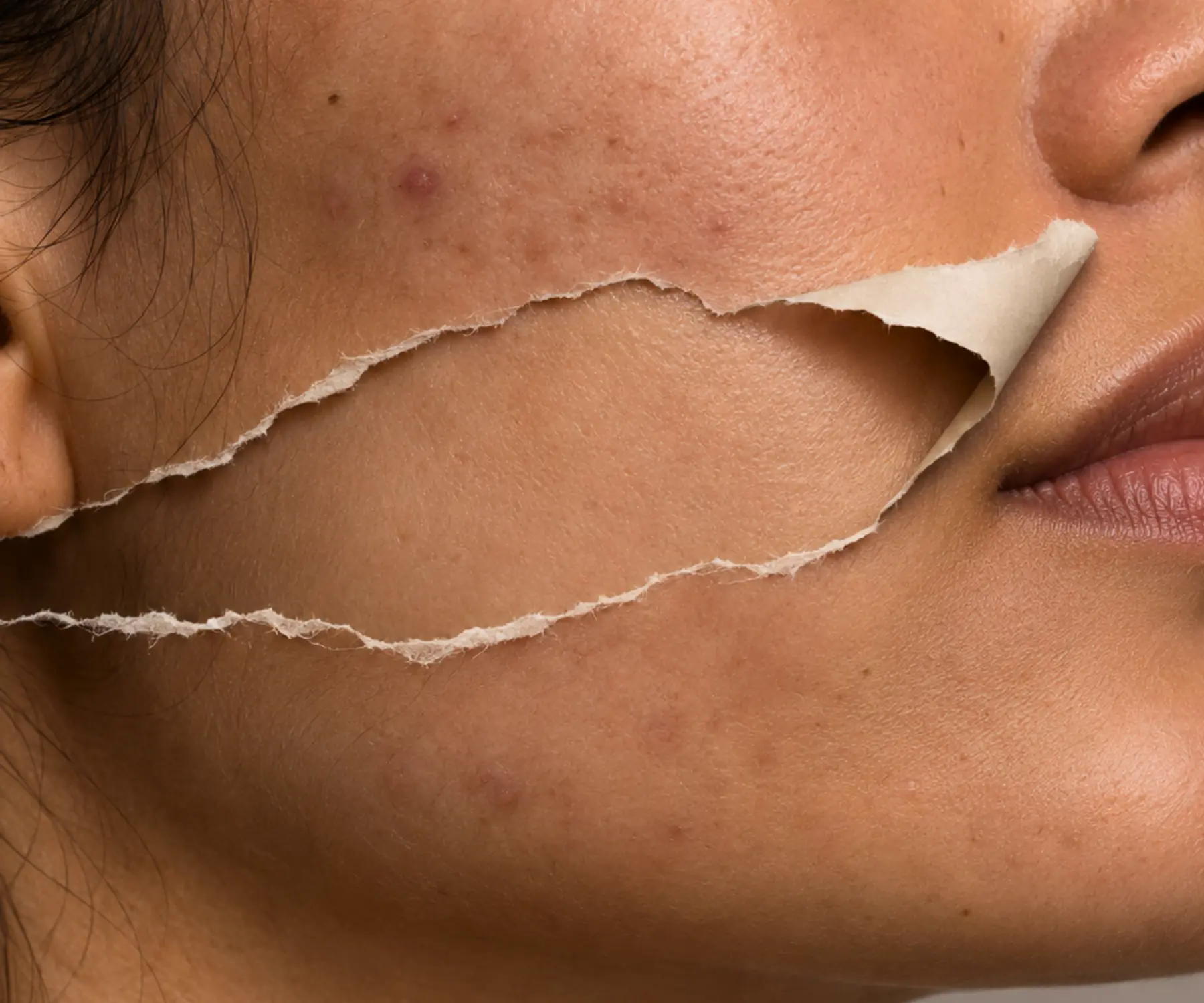
Summer leaves its mark gradually. Sun exposure deepens existing pigment, congestion settles in, and the surface loses some of its clarity. By October, that is often what we notice in the mirror. Chemical peels are one of the most established ways to address it, and dermatologists have performed them for more than 50 years. The months ahead happen to offer the most favorable conditions for doing so.
How a chemical peel works
The outermost layer of skin is made of flattened cells that are no longer living. They are held together by small protein connections and released gradually as newer cells rise to replace them. It is a continuous, largely invisible process.
With age, that process slows. In research on epidermal renewal, the surface layer took roughly 20 days to turn over in adults under 35 and roughly 28 days in adults over 60. When older cells linger, the surface reflects light less evenly, and skin can look dull, rough or uneven in tone.
A chemical peel supports that process. The acid loosens the connections between surface cells so they release evenly, over a controlled period, rather than unevenly over many weeks. Under the microscope, glycolic acid has been shown to act on the outermost layers while leaving the skin's barrier structure intact.
Each acid has a distinct role. Glycolic and lactic acids are water-soluble and work primarily at the surface. Salicylic acid is oil-soluble, which allows it to reach into pores and makes it well suited to congestion and breakouts. Trichloroacetic acid (TCA) reaches deeper and is used for medium-depth peels.
The visible peeling that follows is not the result itself. It is the older layer leaving. The meaningful change happens beneath it, as skin responds with a fresher, more even surface. In this way, a peel works on the same principle as microneedling: a controlled signal, followed by the skin's own renewal.
Why the season matters
Sometimes, the obvious needs to be stated: newly treated skin is more vulnerable to the sun, so the time of year shapes how much risk comes with a peel. The concern is less about sunburn than about pigment. Inflammation followed by sun exposure can lead to post-inflammatory hyperpigmentation, darker patches that may take months or longer to fade. The less UV new skin meets while it settles, the easier that outcome is to avoid.
That is the case for fall and winter. A series of light peels typically runs three to five sessions, spaced two to five weeks apart. Begun in November, even the longest of those plans concludes by late March, before the stronger sun of spring returns. Every session, and every week of healing in between, takes place in the gentlest light of the year.
The difference shows up in practice, too. When researchers at Boston Medical Center looked back on five years of superficial peels, 473 treatments in all, the season proved telling: side effects followed 6% of spring peels and fewer than 1% of winter peels. The same physician performed every one. Only the light outside had changed.
Winter does ask for a little care of its own. Snow reflects UV and can nearly double its strength, and UV grows stronger at higher altitudes. A ski weekend in the days after a peel deserves the same diligence as a week at the beach: broad-spectrum sunscreen, reapplied through the day, with goggles or a brimmed hat wherever possible.
The season's quieter challenge is dryness. Cold air outdoors and heated air indoors both draw moisture from the skin, and freshly peeled skin feels it most. The AAD advises keeping treated skin moisturized as directed, because skin that dries and cracks can scar. A rich, simple moisturizer becomes one of the most valuable steps in winter aftercare. And with holiday gatherings on the calendar, light peels are best scheduled at least a week ahead, since healing takes one to seven days.
For most people, then, autumn is less the destination than the beginning, with the results visible by spring.
How to choose the right chemical peel depth
There is no universal scale for peel strength. Levels, grades and "lunchtime peels" are names chosen by individual brands and practices, so a Level 3 in one office may not match a Level 3 in another. The clinical literature uses simpler language: how deep a peel reaches. Superficial peels stay within the epidermis, medium-depth peels reach into the upper dermis, and deep peels extend further still. Deeper peels bring more visible change, along with longer recovery and greater risk.
No two complexions are alike. Skin type, tone, sensitivity, history and goals differ from person to person, and so does the way a peel behaves: its depth depends on the acid chosen, its concentration and how long it remains on the skin. Something applied to your face to renew it deserves the same tailoring as anything else designed for you. That is why every peel plan at The Dot Theory begins with a consult to determine what is right for your skin.
What determines how deep a peel goes
The percentage on the label tells only part of the story.
- Time can change the category. A 70% glycolic acid solution may act as a superficial peel when applied for five minutes, and as a medium-depth peel when left for fifteen.
- pH matters as much as percentage. A 10% glycolic preparation at pH 3.0 is generally more than twice as active as the same concentration at pH 4.0.
- Layers and vehicle count, too. The acid, its vehicle, its concentration, the number of layers and the contact time all determine depth.
- Your skin is part of the equation. Solutions reach the dermis more quickly in thinner skin than in thicker skin, so the same peel can behave differently from one face to the next.
A guide to medical-grade peel acids
TCA, glycolic and salicylic acid are the names most people hear, but each belongs to a broader family with its own strengths.
- Glycolic acid. The smallest AHA; it penetrates quickly and is neutralized at a set time. Typically 30% to 50% for superficial peels, while 70% approaches medium depth. Often chosen for dullness, rough texture and early fine lines.
- Lactic acid. An AHA that refines the surface more gently, typically at 10% to 30%. Often chosen for uneven tone and mild sun damage.
- Mandelic acid. A larger AHA molecule that penetrates slowly and evenly, typically around 40%. Often chosen for sensitive skin and skin of color.
- Salicylic acid. An oil-soluble BHA that reaches into pores and calms inflammation, typically at 20% to 30%. Often chosen for congestion and breakouts.
- Jessner's solution. A blend of salicylic acid, lactic acid and resorcinol, applied in layers. Used alone, or to prepare the skin before TCA.
- TCA (trichloroacetic acid). Coagulates surface proteins, and a white "frost" helps the provider gauge depth. Typically 10% to 25% for superficial peels and 35% to 50% for medium depth. Often chosen for pigment, sun damage and fine lines.
Two details are worth knowing. In the Boston review of darker skin types, none of the patients treated with 40% mandelic acid experienced a side effect. And in FDA research, salicylic acid did not raise the skin's sensitivity to UV the way glycolic acid did.
Medical-grade versus at-home peels
The same acid can appear in a drugstore toner and a clinical peel, at very different strengths. According to the FDA, AHA products sold to consumers typically contain 10% or less, those used by trained cosmetologists run between 20% and 30%, and those used by physicians can range from 50% to 70%. The Cosmetic Ingredient Review panel recommends that consumer products stay at or below 10% with a pH of at least 3.5, and that salon products stay at or below 30% with a pH of at least 3.0.
At-home products are designed for gentle, gradual maintenance. A medical-grade peel is a deliberate, controlled treatment, which is why it calls for an assessment beforehand and supervision during.
The deeper the peel, the longer the sun matters
Depth sets the length of recovery, and recovery sets how long the skin needs protecting. The American Academy of Dermatology recommends daily sunscreen after a light peel, complete sun avoidance until the skin heals after a medium peel (typically seven to fourteen days), and complete sun avoidance for three to six months after a deep peel.
The AAD also notes that when serious side effects occur, it is often because aftercare instructions were not followed, and that the risk of infection or scarring rises sharply when skin is not protected from the sun. In other words, what happens after the appointment can shape the result as much as the peel itself.
This is the real reason fall is the ideal time to begin planning a peel series. The longer and deeper the recovery, the more it helps to have the gentlest months of the year on your side.
At The Dot Theory, peels are nurse-led and remain within the light-to-medium range. They are offered in five grades, from the gentlest (Grade 1) to the most intensive (Grade 5), and each is designed to be layered with microneedling. Grade 1, our Lunch Time Peel, is also available as a standalone treatment through the end of the year. We do not perform deep peels.
Questions to ask your practitioner
Because peel strength isn't standardized, the best protection is a clear conversation before you book. Wherever you go, these questions are worth asking:
- Which acid are you recommending, at what concentration, and why for my skin?
- What depth should I expect, and how many sessions will it take?
- What will my skin look like each day of recovery, and how much downtime should I plan for?
- How will you adjust the peel for my skin tone and any history of pigmentation?
- What should I stop using beforehand, and when can I restart my routine?
- What sun protection and aftercare will I need, and for how long?
- Who performs the peel, and is a physician involved in the protocol?
Peels and microneedling
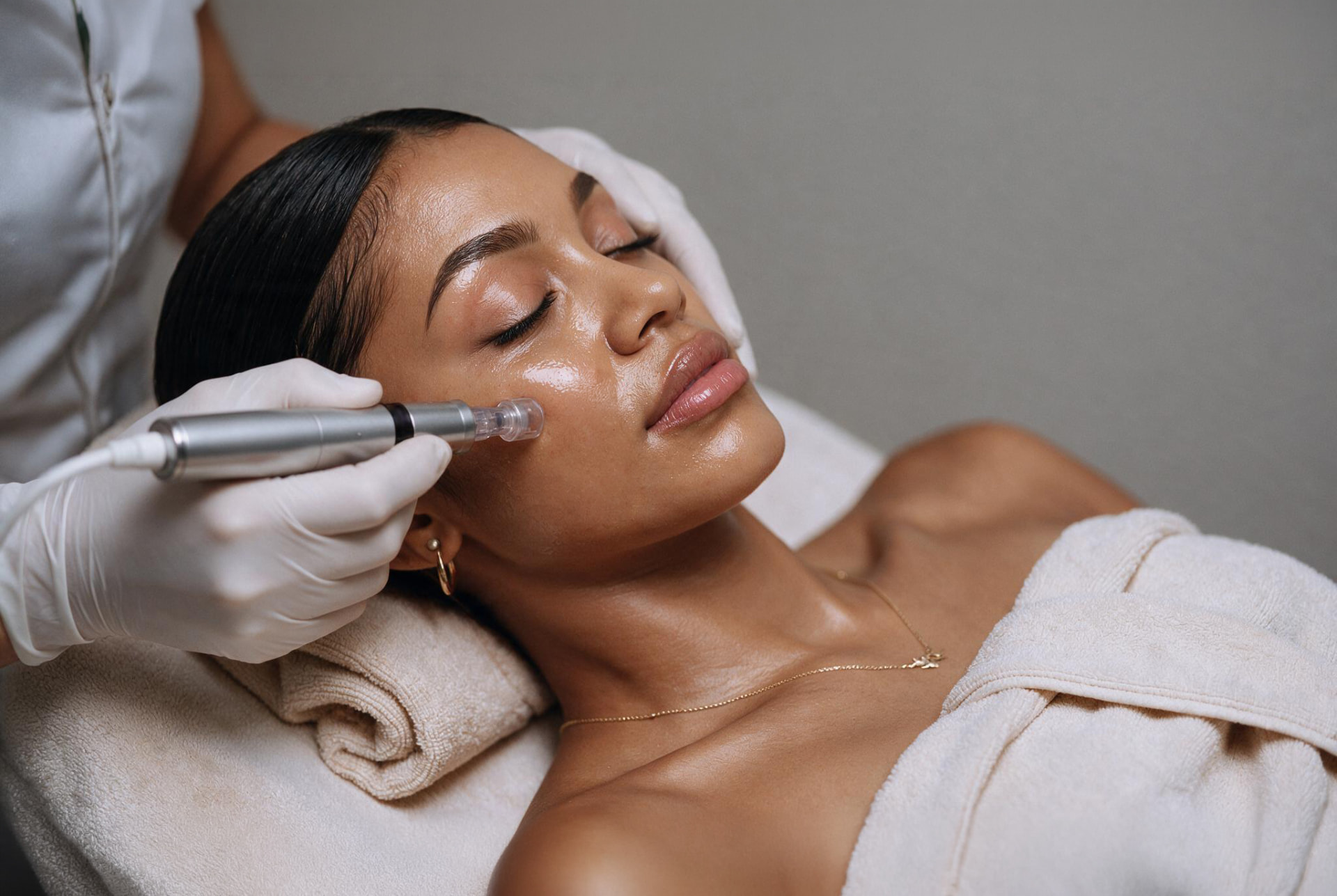
Microneedling and chemical peels reach the skin in different ways. Microneedling creates thousands of fine channels through the surface, and the skin's response to them builds collagen in the deeper layers, the structure that keeps skin firm. A peel works chemically rather than mechanically, loosening the outer layers so they shed evenly and refining texture, clarity and tone. One prompts renewal from within; the other refines what sits on top. Used together, they complement rather than duplicate one another.
Research on the combination is most developed in acne scarring. In one study of 60 patients with skin types III and IV, adding 35% glycolic acid peels to microneedling produced greater improvement in texture and pigmentation than microneedling alone. Whether the two treatments take place in the same visit or on separate days is determined by your nurse and our medical directors. If you're curious why the sessions themselves add up, see why frequency matters.
When a peel isn't appropriate
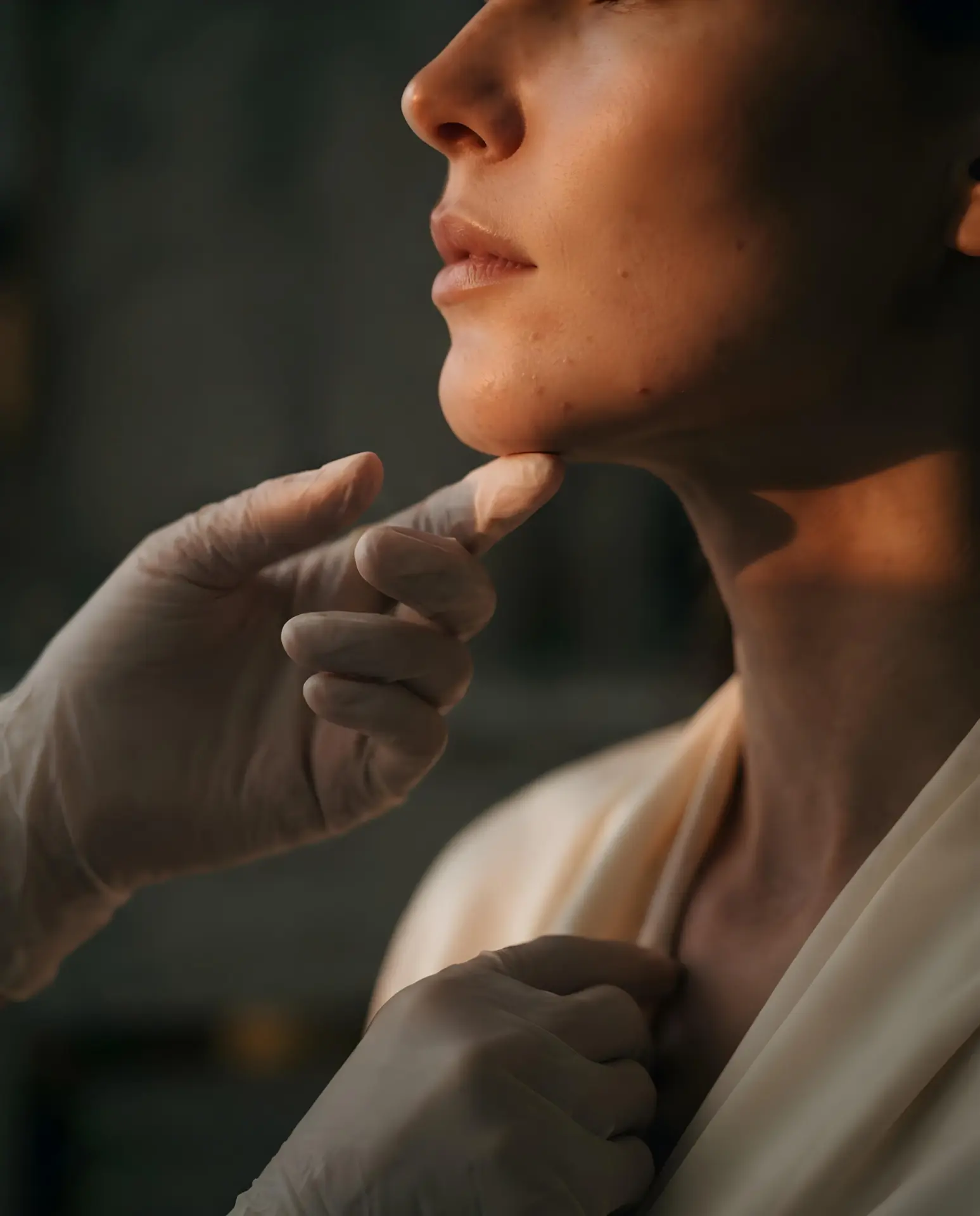
A peel is elective, and certain circumstances call for waiting or adjusting the plan. Our nurses screen before every session, not only the first.
- Pregnancy and breastfeeding. We do not perform peels of any grade during pregnancy or while breastfeeding.
- Isotretinoin (Accutane). We do not perform peels for clients taking isotretinoin.
- A history of cold sores. Peels can reactivate the herpes simplex virus. Clients with a history of cold sores are prescribed an antiviral as part of their plan, and an active cold sore means rescheduling.
- Recent sun, waxing or retinoids. A fresh tan or sunburn, recent waxing, or active retinoids in the treatment area may mean waiting or adjusting the approach.
Deeper skin tones are planned for rather than excluded. In a study of 473 superficial peels on skin types III to VI, 3.8% were associated with a side effect, and all resolved. Acid selection, strength and preparation are adjusted accordingly.
Is this your peel season?
A chemical peel supports a process the skin already performs, in a controlled and measured way. Depth determines both the result and the recovery. And the lower UV of fall and winter makes the weeks after treatment considerably easier to manage.
As with most things in skin care, consistency matters more than intensity. The AAD notes that light peels typically require three to five sessions, spaced two to five weeks apart, to reach the desired result. The cooler months offer an ideal window to begin.
If you would like to understand which grade suits your skin, a consult is the best place to start. You are also welcome to text the Concierge with any question.
Frequently asked questions
When is the best time of year for a chemical peel? Late fall and winter. UV intensity is at its lowest, which makes post-peel sun protection easier to maintain and lowers the risk of pigment changes.
Can a chemical peel be combined with microneedling? Yes. Each of our peel grades is designed to be layered with microneedling. Your nurse and our medical directors determine whether both happen in the same visit.
How many chemical peels will I need? For light peels, typically three to five sessions spaced two to five weeks apart.
What is the difference between medical-grade and at-home peels? Strength and supervision. Consumer AHA products typically contain 10% or less, while physician-administered peels can range from 50% to 70%. Medical-grade peels call for an assessment beforehand and a trained provider during treatment.
What is recovery like after a chemical peel? After a light peel, expect a few days of redness and light flaking. After a medium peel, peeling and crusting usually last one to two weeks.
Do I need to avoid the sun after a chemical peel? Daily broad-spectrum sunscreen is essential after any peel. After a medium peel, the AAD recommends complete sun avoidance until the skin has healed.
Next up
Microneedling 101: why tiny channels build stronger skin
Microneedling doesn't add anything to your skin. It wakes up cells that stopped showing up for work and gives them a reason to rebuild, using materials your body makes itself.
Skin School · 8 min read
Still have questions?
Ready to build a plan you can actually stick to? Book a consult, or ask our concierge anything.
Text a human
On it. Opening a text to our team now — tell them what's on your mind and they'll take it from here. If it doesn't open automatically, our number's right here.
General information based on American Academy of Dermatology, FDA and peer-reviewed research on chemical peels. It does not replace an assessment by your provider. If anything here conflicts with what your provider told you, follow your provider.